


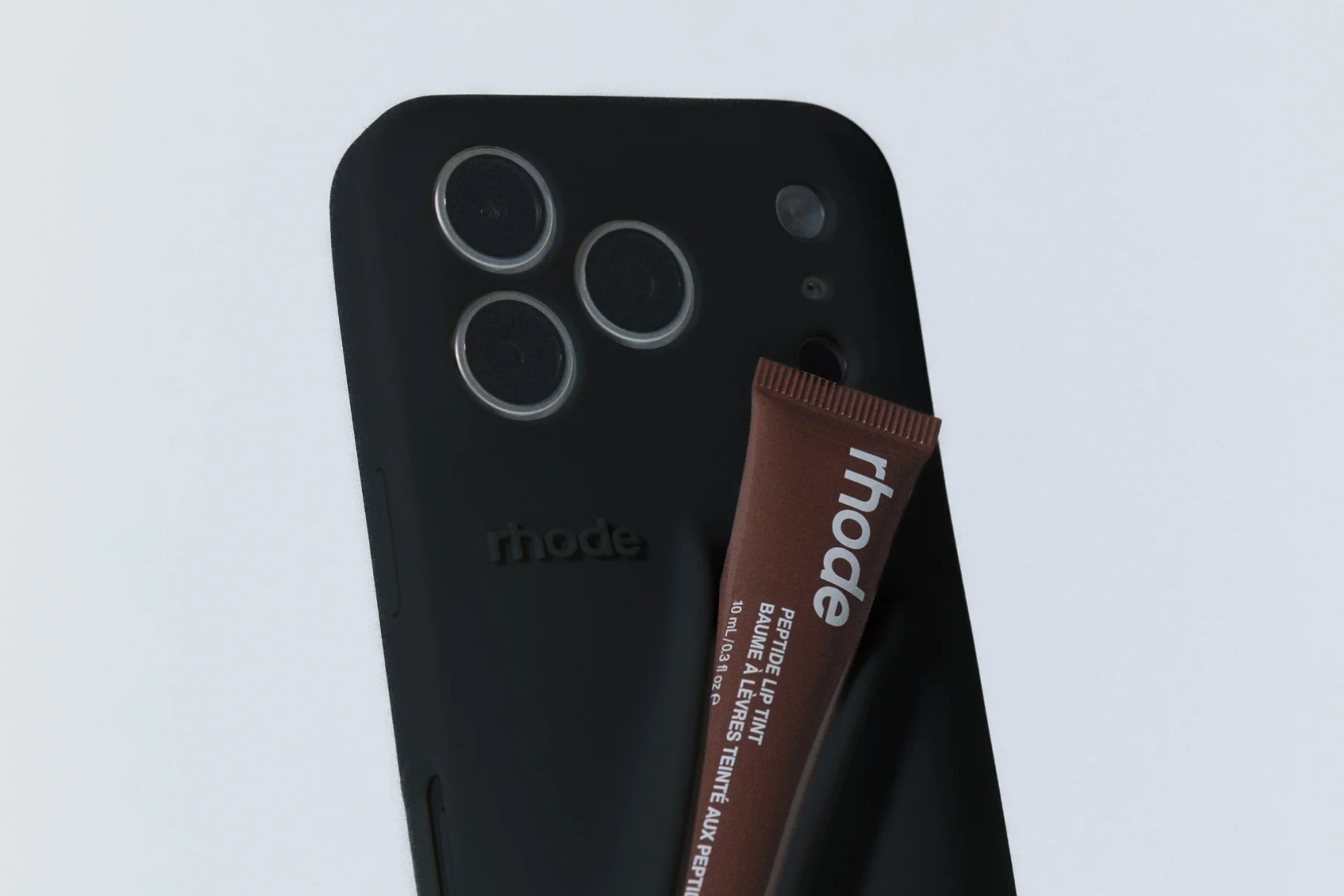
It’s an iPhone case that also fits… your lip gloss?
Rhode’s iPhone Lip Case isn’t new (it launched in 2021), but it’s one of the clearest early signals of how beauty as a category has re-negotiated where it belongs. What once lived quietly behind a bathroom mirror has now stepped into the spotlight: with beauty products designed to be seen, carried, and displayed.
And yes, it’s absurd. Which is exactly why it works.
The Lip Case ultimately points to how beauty has evolved from a private, at-home ritual practiced in front of the mirror, into a public performance and deeply personal form of self-expression.
But what’s changing isn’t just product design; it’s the increasing social acceptability of beauty now being practiced in plain sight, and now brands are leaning in.
Rhode’s iPhone Lip Case: Practical Performance
The Lip Case is like an absurdist’s take on a beauty line extension.
Made from a soft, grippy silicone, the Lip Case’s claim to fame is the dedicated slot designed to cradle a single tube of Rhode’s viral Peptide Lip Tint. It also comes in vibrant colors which are precisely matched to the shade inside.
The Lip Case transmuted shoppers’ excitement for Rhode’s already-viral hero product into a collectible, meme-able, beauty accessory which invites shoppers to declare their brand allegiance to the world by keeping their beauty ritual at-hand, as essential as their phone.
It’s practical and performative at the same time — emblematic of shoppers’ growing desire to express personal style, taste, and preference through beauty in public.
⚠️ For beauty leaders: Rhode isn’t just selling a phone case; they’re selling a lifestyle accessory that doubles as a billboard. The phone case is seen > sparks discussion “Is that a lip gloss on your phone?” > drives discovery. Consider: What hero product in your portfolio is steering conversation? Which products are already “on display?”
Starface: When Acne is Actually Cute
If Rhode turns beauty something you carry, then Starface turns beauty into something you wear. A slightly different approach to beauty in public.
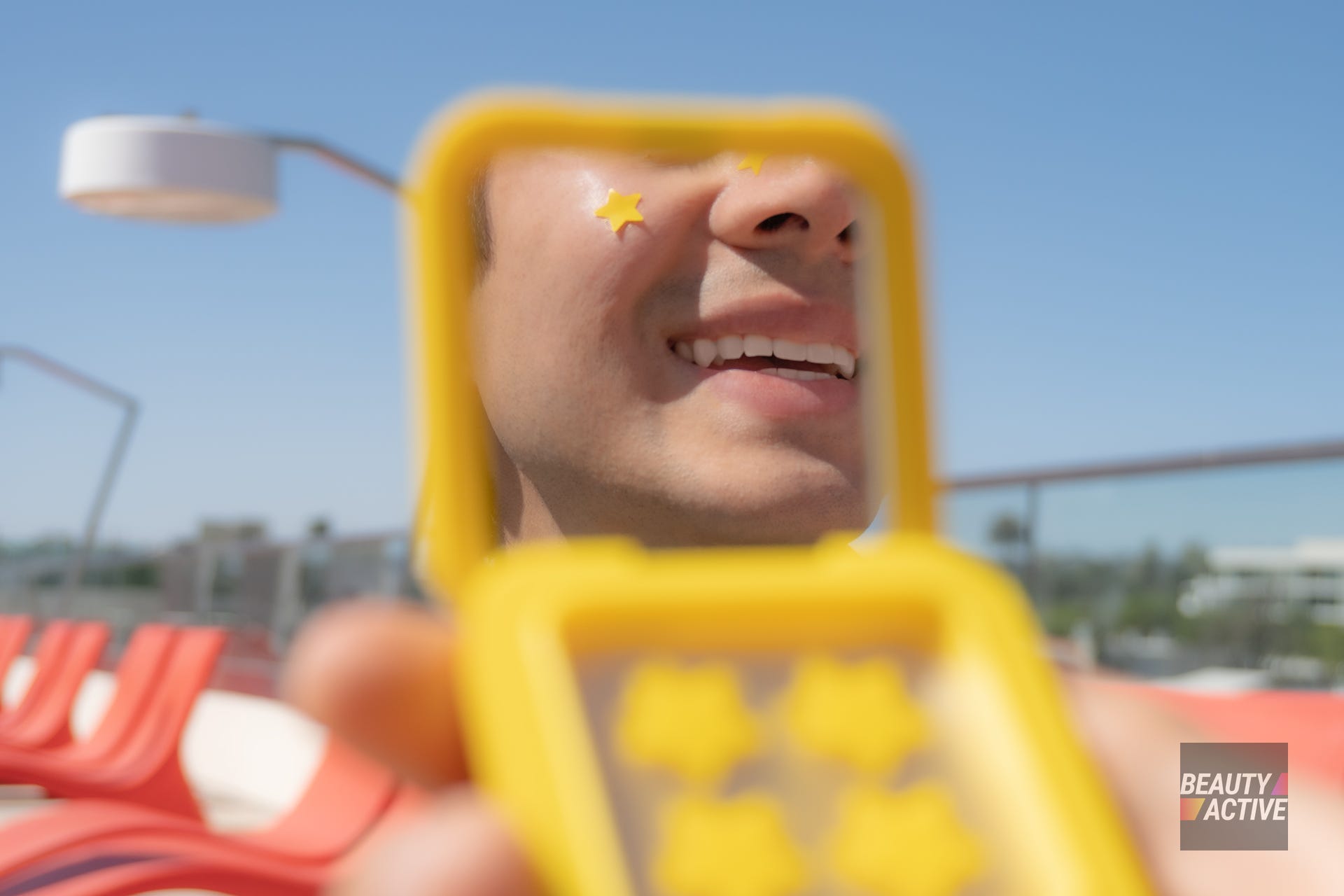
Instead of hiding acne, Starface’s hydrocolloid acne patches subvert the norm entirely, encouraging users to actually celebrate their blemishes by treating acne spots with colorful stickers cut into stars, and stored in smiley-face compacts to carry on the go.
And yes — people wear them, proudly, on their faces.
“It’s a subtle accessory — a little accent piece… and it’s super photogenic and cute,”
Julie Schott, Co-Founder & CEO, Starface (via Vogue)
Schott also told ELLE in 2024 that Starface exists to bring more positivity to shoppers’ self-image, stating that “[Millennials] grew up being told you have a ‘before and after,’ and until you get to the after, you’re ugly and flawed.”
Starface rejects this.
Instead, it re-introduces playfulness to skincare. In a saturated shopping aisle dominated by clinical packaging and “derm-approved” shorthand, Starface sits in stark contrast. It is deliberately loud with bright colors, whimsical shapes, and messaging that reframes acne care as self-expression.
The Big Yellow Personality
hi bff :) i’m big yellow!

i’m a lil cube from outer space, sent down 2 earth 2 help ppl feel positively cute abt caring 4 their skin. that’s what starface is all abt: turning breakouts into moments of self-expression n fun with dermatologist-approved essentials that care 4 acne with kindness. here’s ur daily reminder that ur cute n ily <3
It reads like a text message from your Gen Z bestie. And that’s the point.
Form Meets Function
But that’s not to say Starface isn’t effective. Starface’s original Yellow Hydro-Stars use a proven, 100% hydrocolloid formula, which has been commonly used in the industry to absorb fluid and deter picking. Meanwhile, other variations layer in familiar acne care ingredients without compromising on the aesthetic:
Blue Hydro-Stars - 1% salicylic acid to treat more active breakouts
Green Hydro-Stars - tea tree oil to calm redness
Purple Hydro-Stars - aloe vera and licorice extract for post-blemish recovery
Pink Hydro-Stars - same as Yellow ones, just… pink (because cute)
All of these proven, functional skincare ingredients operate quietly in the background, keeping Hydro-Stars readily: wearable, expressive, and (most of all) public.
⚠️ For beauty leaders: Starface inverted the skincare playbook by asking “What if acne wasn’t something to hide?” Their success is a clear signal of how self-expression, levity, and joy are valid positioning in a category that is usually defined by just results. Where else might a “results and” positioning unlock a new audience?
Under-Eye Masks: Beauty in Plain Sight
Rhode and Starface are clear examples of beauty products designed for public use, but under-eye masks tell a different story. They weren’t conceived as public-facing statement pieces. Instead, they’re becoming more and more acceptable in public through increasing social permission.
Under-eye masks have quietly snuck into transitional spaces — airport lounges, subway platforms, and waiting rooms — defined by their wait-times, relative anonymity (I’ll never see these people again), and overall low social stakes. These in-between spaces are where social rules have loosened, because although you’re visible, you’re largely unaccountable; making it the perfect place for a midday touch-up, with little to lose and a refresh to gain.
Most of all, it’s the format that does the work. Under-eye masks are compact, non-messy, and over in less than 15 minutes. Unlike full-face masks or liquid treatments, they don’t disrupt the space or people around you. The barrier to “skincare in public” is lower when the ritual is quick, contained, and quiet.
Just Dieux It!
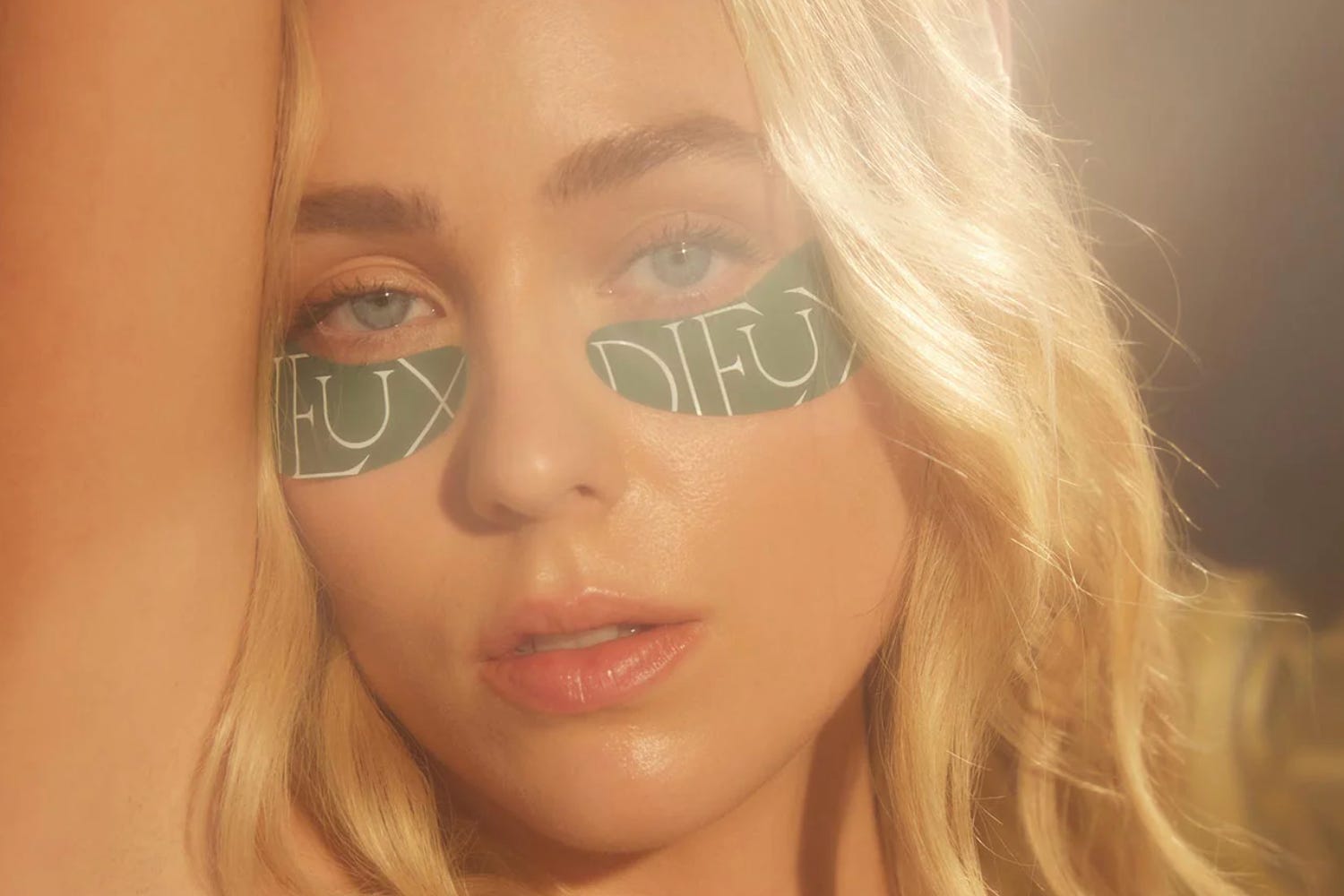
Cult-favorite brands like Dieux have already optimized their format to go beyond the bathroom mirror, and it’s their claim to fame: stylish, reusable under-eye patches to take on-the-go.
Reusable format — Sustainable, but also: an ongoing relationship with the product (you don’t throw it away after one use)
Dedicated carrying case — Signals portability by design; it’s meant to leave the house
Loud, stylish designs — Angel wings, bright blue, prominent Dieux logo mark; these are designed to be seen, not hidden
Dieux under-eye patches have now become something of a status symbol. A subtle flex that says “I take care of my skin, and I’m not embarrassed about it.” They’ve managed to turn a private, 15-minute hydration ritual into an identity marker.
⚠️ For beauty leaders: Under-eye masks didn’t start public, but consumer behavior is pulling them there. Dieux leaned in by designing for visibility rather than discretion. What products in your portfolio are already being used “in public” by early adopters? How might you design toward that behavior vs against it?
The New Rules of Public Beauty
Beauty in public is a cultural shift making self-care socially acceptable, and making it so that the your bathroom beauty ritual isn’t your only beauty moment of the day. If you’re building in beauty CPG, this shift is demanding answers to new design questions:
Portability as a feature — Not just “travel-friendly” but designed to be seen in transit. How does your product become a part of the shoppers’ identity, and not something just stuffed into their bag?
Visibility as positioning — Products that once prioritized discretion are now designed to be on display. What are the categories still ripe for disruption, still awaiting their own beauty in public moment?
Transitional spaces as touch-points — Airports, commutes, waiting rooms. These in-between moments are now legitimate beauty occasions. If your brand is optimized for the 10-minute ritual, then it may find new usage occasions hiding in plain sight. How does your product messaging change to reflect this?
Self-expression AND results — Every beauty brand wants to be effective, and that still matters. But what else? Efficacy is table-stakes, and shoppers are demanding more. Self-expression is one reframe that may unlock an entirely new audience. What message does your brand send aside from “our stuff works?”
Shoppers used to ask “Will this product make me look better?” But now they’re asking “What does this product say about me?” — and your brand’s answer to that question may now be more important than the product itself.